
From Humboldt to The Farm: Mark Marquess and a Lifetime Built on Baseball
⋅ NBC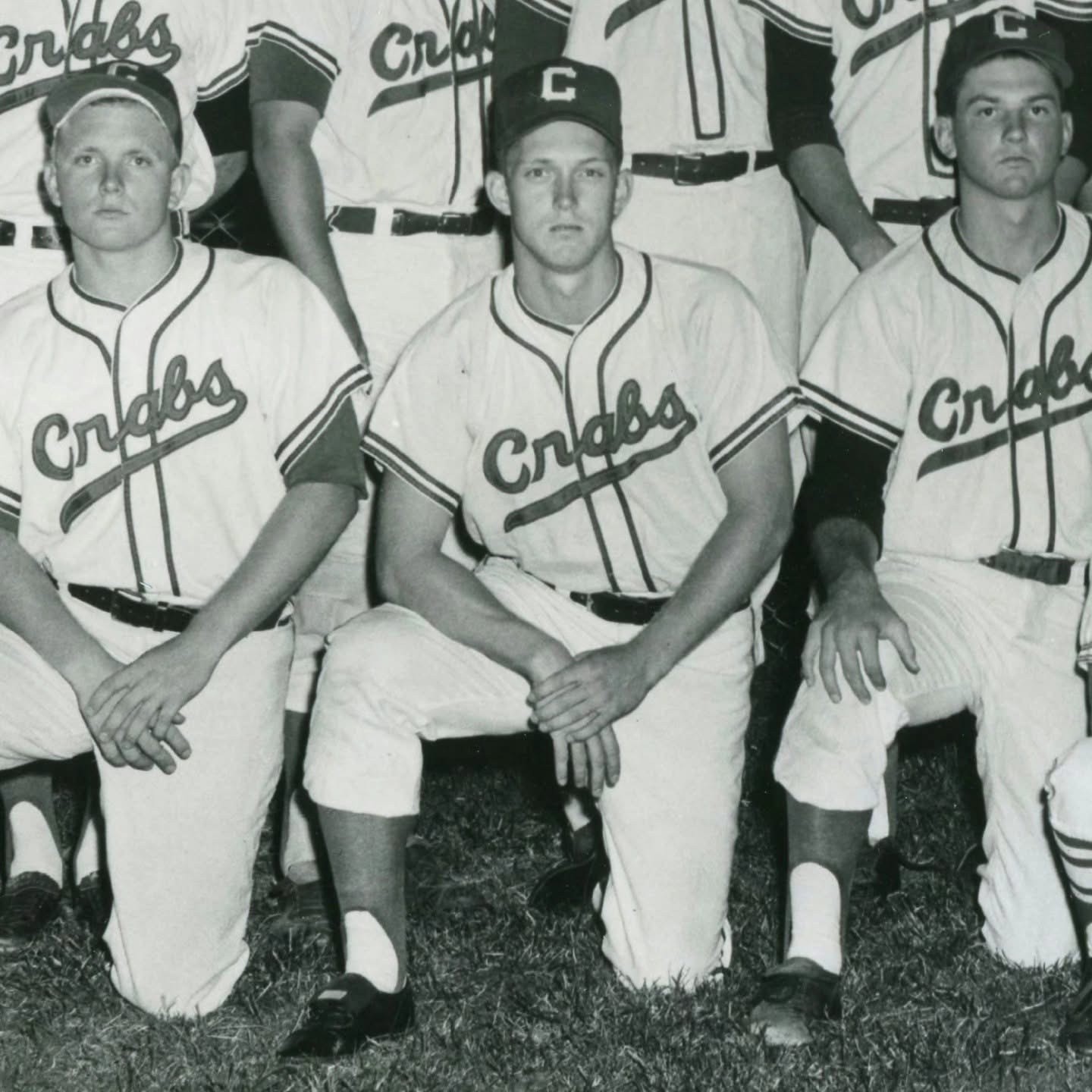
The legendary Stanford coach first made his mark as an All-American slugger with the Humboldt Crabs
Mark Marquess died Friday at his California home, leaving behind a legacy that stretched from the fog-soaked North Coast to Omaha’s College World Series and the Olympic podium in Seoul. He was 78.
The fourth-winningest coach in Division I baseball history with 1,627 career victories, Marquess spent 41 years leading Stanford to heights that seemed improbable for a program that had never won a national championship before he arrived. Two College World Series titles in 1987 and 1988. An Olympic gold medal coaching Team USA that same summer. Fourteen trips to Omaha. Over 100 players sent to professional baseball.
But before he was “9”—the number that became synonymous with Stanford baseball excellence—Marquess was a cleanup hitter for the Humboldt Crabs in the summers of 1966 and 1967, learning his craft at the NBC World Series in Wichita.
The Crabs Connection
The Humboldt Crabs, founded in 1945 by Lou Bonomini in Arcata, California, are the oldest continuously operating summer collegiate baseball team in America. By the 1960s, under Bonomini and general manager Ned Barsuglia, they had become a national powerhouse, regularly competing at the NBC World Series against the best amateur teams in the country.
Marquess arrived in the summer of 1966 fresh off his freshman year at Stanford, where he’d played both baseball and football. At 5’9″ and built more for contact than power at the college level, he found a different role with the Crabs: cleanup hitter and run producer. That summer, he earned NBC World Series All-American honors—recognition that placed him among the tournament’s elite performers.
He returned in 1967, again hitting cleanup for the Crabs while simultaneously earning All-American honors at Stanford as a first baseman, hitting .404 that season, a mark that still ranks fifth in school history. That summer also brought international recognition when Marquess played for Team USA at the Pan American Games in Winnipeg, Manitoba, where the Americans defeated Cuba 2-1 in the gold medal game.
Those two summers in Wichita with the Crabs weren’t just about individual accolades. The NBC World Series represented the pinnacle of amateur baseball in that era, drawing scouts, professional players between assignments, and college stars from across the country. The tournament atmosphere—double-elimination pressure, packed stands at Lawrence-Dumont Stadium, games under the lights—provided invaluable experience for a young player still learning the game.
From Player to Coach
The Chicago White Sox selected Marquess in the 25th round of the 1969 draft. He spent five seasons in their minor league system, reaching Triple-A Des Moines in 1973 as a player-coach before recognizing his future lay elsewhere. He returned to Stanford as an assistant under Ray Young in 1972, spending five years learning the coaching craft before being promoted to head coach in 1977.
The timing was perfect. College baseball was evolving, aluminum bats had changed the game’s offensive dynamics, and programs willing to invest in facilities and recruiting were beginning to separate from the pack. Marquess, drawing on his experiences at every level—from Humboldt’s summer grind to the Pan Am Games to the professional ranks—built Stanford into a perennial contender.
His connection to the NBC World Series continued through the mid-1970s when he served as assistant coach for the Boulder Collegians, one of the dominant semipro programs of that era. Under the leadership of owner and manager Bauldie Moschetti, the Collegians won four NBC championships between 1966 and 1978, attracting future Hall of Famers like Tony Gwynn and World Series heroes like Joe Carter.
Marquess helped guide the 1975 Collegians to an NBC championship—his second title in Wichita following his playing days with the Crabs. The following year, Boulder finished third. In 1977, he took the Stanford head coaching job, and his focus shifted from summer ball to building a dynasty on The Farm.
The Stanford Years
The results speak for themselves: 1,627 wins against 878 losses over 41 years, a .649 winning percentage that placed him fourth all-time among Division I coaches. Three-time NCAA Coach of the Year. Nine-time Pac-10 Coach of the Year. Thirty NCAA tournament appearances. Fourteen College World Series trips, including five championship game appearances.
The 1987 and 1988 teams captured back-to-back national titles, with the latter squad going 50-17 and dominating a College World Series bracket that included future major leaguers like Robin Ventura and Charles Johnson. That same summer, Marquess led Team USA to Olympic gold in Seoul—the first Olympic gold medal in baseball history, as the sport was appearing as a demonstration event before becoming an official Olympic sport in 1992.
His squad defeated Cuba 5-4 in the Intercontinental Cup finals that year, marking the first time since 1970 that the United States had beaten the Cubans in international competition. The victory held special significance: Marquess became the only person ever to post victories over Cuba as both a player (1967 Pan Am Games) and a coach.
From 1989 to 1998, he served as president of USA Baseball, helping guide the organization through a period of growth as baseball expanded its international footprint. His influence on the game extended far beyond Stanford’s campus.
The Teacher
Over 100 former Stanford players reached Major League Baseball during Marquess’s tenure, including Hall of Fame pitcher Mike Mussina, three-time All-Star and 1993 AL Cy Young Award winner Jack McDowell, and current Tigers manager A.J. Hinch. Among active players, Cubs second baseman Nico Hoerner, Dodgers utility star Tommy Edman, and Royals pitcher Kris Bubic all developed under Marquess at Stanford.
But his impact went beyond producing professional players. As David Esquer, Stanford’s current coach who played shortstop on the 1987 championship team, said Friday: “This man was Stanford baseball. He was my coach, and like a father to me. I wouldn’t be where I am today without him”.
Joe Maddon, who played for the Boulder Collegians in 1975 when Marquess was an assistant coach, often credited Marquess and Moschetti with launching his professional baseball career. Though Maddon never reached the major leagues as a player, he went on to manage the Tampa Bay Rays and Chicago Cubs, winning the 2016 World Series with Chicago.
Marquess typically arrived at Sunken Diamond, Stanford’s home field, in the early morning hours, then went to bed early to prepare for the next day. He was known for his humility despite the accolades, never dwelling on his place among coaching legends. “Really, I don’t think about it,” he said in 2008. “It’s just a matter of you get busy and as a coach you worry about the next one. You worry about the ones you lost, too much. When I think about it, it just means I’ve been coaching a long time”.
Coming Full Circle
In 2018, Marquess was inducted into the National Baseball Congress Hall of Fame, recognition for his contributions both as a player with the Humboldt Crabs and as a coach with the Boulder Collegians. The honor connected him back to where his national reputation began—those summer nights in Wichita, hitting cleanup for the Crabs, earning All-American honors, and learning what it took to compete at the highest levels of amateur baseball.
The NBC Hall of Fame includes 11 members who are also enshrined in Cooperstown: Satchel Paige, Tony Gwynn, Ozzie Smith, Tom Seaver, Whitey Herzog, Don Sutton, Bob Boone, Pat Gillick, Buck O’Neil, Hilton Smith, and Dave Winfield. Marquess’s inclusion places him among the most accomplished figures in amateur baseball history.
He was inducted into the National College Baseball Hall of Fame in 2021, joining the Stanford Athletics Hall of Fame, the American Baseball Coaches’ Association Hall of Fame (1997), the San Jose Sports Hall of Fame (2017), and the NBC Hall of Fame (2018). The collection of honors represents a career defined by excellence, humility, and dedication to developing young players.
The Legacy
Marquess’s path from the Humboldt Crabs to Stanford’s dugout to the Olympic podium represents a uniquely American baseball journey. He played the game at every level—high school two-sport star, college All-American, professional minor leaguer—before finding his calling as a teacher and builder of programs.
The summers in Wichita with the Crabs taught him what the NBC World Series had been teaching players since 1935: that amateur baseball, played at its highest level, demands the same commitment and intensity as the professional game. That lesson shaped everything he built at Stanford.
For the Humboldt Crabs, who have sent over 60 players to the major leagues in their 80-year history, Marquess represents the best of what summer baseball can produce: a player who used those competitive summers to develop his skills, then spent a lifetime giving back to the game that gave him so much.
His 2018 induction into the NBC Hall of Fame connected him permanently to the tournament where he first proved he belonged among baseball’s elite—a fitting recognition for a man who spent 50 years in the game, from Arcata to Palo Alto, always arriving early and always focused on the next one.