
When Aviation Workers Built Championships: The Boeing Bombers Legacy
⋅ NBC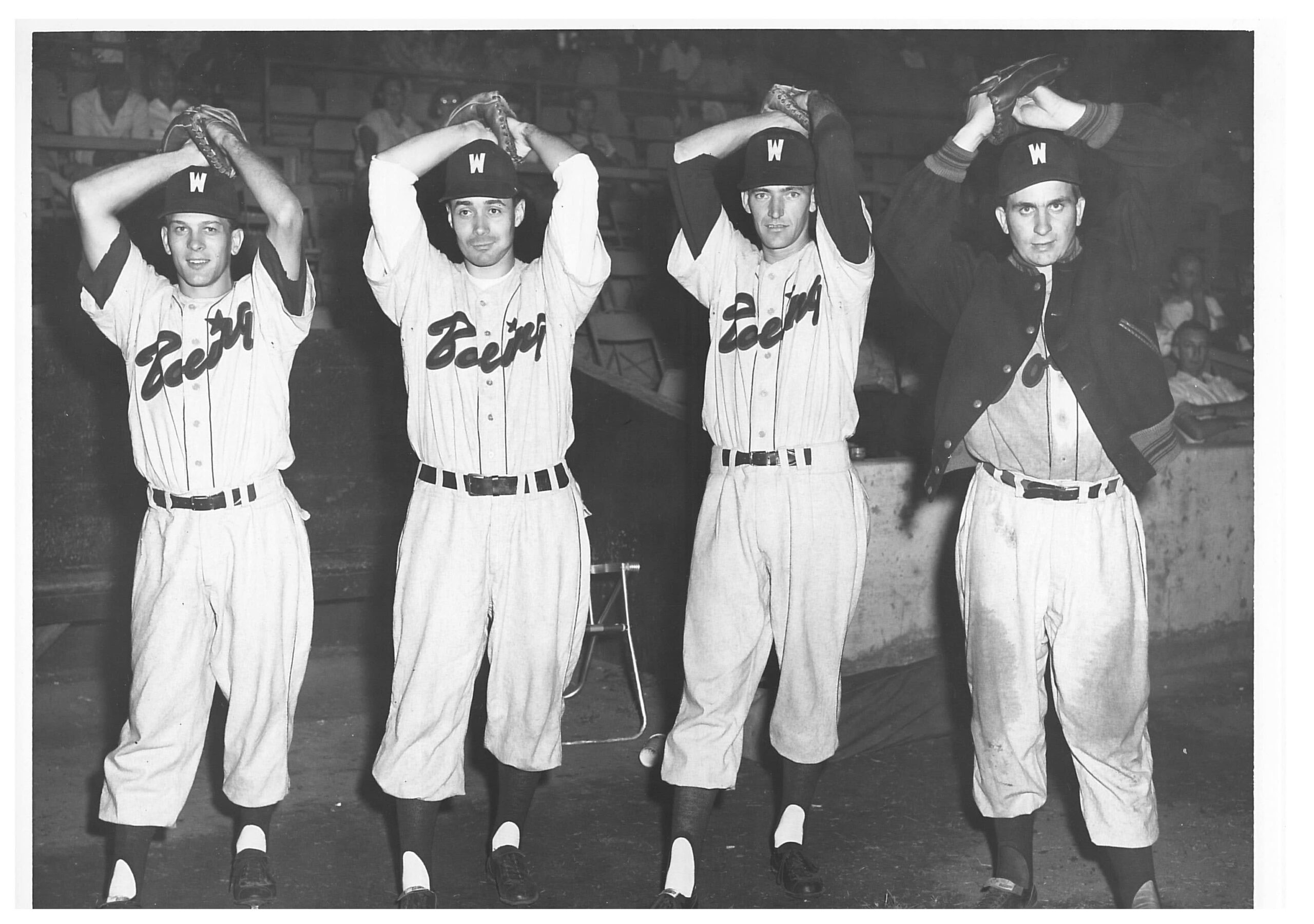
For decades in Wichita, aviation workers did more than build bombers and airliners—they also powered some of the greatest teams in National Baseball Congress history.
When Factory Workers Became Champions
In the 1940s and 1950s, Boeing employees weren’t just assembling B-29 Superfortresses and B-52 Stratofortresses on the factory floor. By night and on weekends, they were competing for national championships as the Boeing Bombers baseball team.
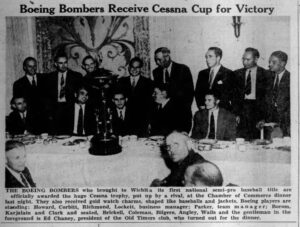
The Bombers made their mark in 1942, becoming the first Kansas team to win the NBC World Series. In a fitting championship for the “Air Capital,” the hometown team defeated the Waco Dons 2-1 in a 10-inning thriller. Boeing infielder Ed Borom, a six-year minor league veteran, earned Most Valuable Player honors as the team went 7-1 in the tournament.
The timing was significant. America had just entered World War II, and Boeing’s Wichita plant was ramping up production of the B-29 Superfortress—the most sophisticated combat aircraft of the war. The tournament itself gained momentum during this decade as Kansas teams began “flexing some muscle,” and Boeing’s championship embodied Wichita’s growing importance in both aviation and baseball.
A Dynasty Built on Aviation Excellence
The Bombers continued their championship run in the 1950s, capturing NBC titles in 1954 and 1955. These weren’t just company teams filled with weekend warriors—they were rosters stacked with minor league experience and occasional major league talent.
When the Bombers needed to win two games against the Springfield Generals to capture the 1954 championship, first baseman Loren “Big Pack” Packard went 8-for-9 in the two games, delivering one of the most dominant performances in tournament history.
The 1955 team featured one of the most remarkable lineups in NBC history. Led by Daryl Spencer—a Wichita-born New York Giants infielder serving an Army hitch at Fort Sill, Oklahoma—the Bombers went on to win the inaugural Global World Series in Milwaukee. Spencer, who was named MVP of the NBC tournament that year, anchored a team where everyone else worked at Boeing, though all had minor league baseball experience.
The 1955 championship game against Hawaii showcased the team’s resilience. In an 11-inning battle, reliever Vern Frantz held the Red Sox scoreless for eight innings while the Bombers scratched out a 7-4 victory.
Not every season ended in glory. In 1953, the Bombers reached the NBC championship game but fell short against the team from Ft. Leonard Wood.
The Cessna Connection
While Boeing dominated the headlines, they weren’t the only aviation company fielding competitive teams. The Cessna Bobcats produced multiple all-tournament players and regularly contended at the NBC World Series, representing another chapter in the proud tradition of aviation-related teams in the city’s baseball history.
These aviation teams—Boeing, Cessna, Beech and others—became as much a part of Wichita’s identity as the aircraft rolling off the assembly lines. They represented a time when American companies invested in their communities, when factory workers could compete at the highest levels of amateur baseball, and when the line between work and play blurred in the best possible way.
A Legacy Forged in Steel and Skill
The Boeing Bombers represent more than just championships and box scores. They embody the unique relationship between Wichita, aviation, and baseball—three threads woven so tightly they became inseparable.
Boeing’s presence in Wichita dates back to the late 1920s with the Stearman acquisition. Through the decades, Boeing Wichita built some of America’s most important aircraft: B-29 Superfortresses during World War II, B-47 Stratojets, and B-52 Stratofortresses. At its World War II peak, the plant employed nearly 30,000 workers and relied on extensive bus service to transport its workforce from across Kansas and Oklahoma.
Those workers didn’t just clock in and out. They became champions. They represented their company, their city, and the Air Capital of the World on baseball’s biggest amateur stage.
An Enduring Spirit
Today, as corporate ownership of Wichita’s big aviation plants evolves, the legacy of those company teams still reflects how deeply baseball and aviation have been intertwined in the city.
While the era of company baseball teams has long passed, the spirit of those championship squads lives on. The Bombers proved that Wichita’s aviation workers could compete with anyone, whether they were building the world’s most advanced aircraft or chasing championships on the diamond.
Long after those teams left the field, their legacy still defines Wichita’s dual identity as Air Capital and amateur-baseball hotbed. From 1942 through the mid-1950s, the Boeing Bombers embodied both, and their three NBC championships remain a testament to an era when factory workers could be champions, and aviation companies could build more than just airplanes—they could build dynasties.
The Boeing Bombers’ NBC World Series championships: 1942, 1954, 1955