2024 Terry Brewster Nominations Open
Nominations for the 2024 Terry Brewster Community Volunteer All-Star Award are now open, in conjunction with National Volunteer Week. Established in honor of Terry Brewster, a devoted supporter and former board member of the National Baseball Congress, this award celebrates …
USA Baseball Girls Clinic May 4
Wichita, Kansas – April 22, 2024 – The NBC Baseball Foundation is proud to announce a special partnership with League 42 and USA Baseball.
The partnership will host a baseball clinic on May 4th for the girls of League 42, instructed …
Women Umpires Take the Field – in the 1940s
While Hap Dumont was ahead of his time in many ways, perhaps one of his most impactful promotions involved hiring women as umpires for the National Baseball Congress National Tournament. In 1943, Dumont hired Lorraine Heinisch to umpire one game. …
NBC Feature: Dian Overaker
While Hap Dumont may have dreamt up the National Baseball Congress and the idea of a national tournament, one Wichita woman is credited in part with keeping the tournament going for so many years.
Dian Overaker worked as an administrator for …
NBC Feature: Betty Abbott
The NBC World Series is celebrating 90 years this summer, and one woman greeted fans for more than half of those tournaments. Betty Abbott is a familiar face for fans, organizers and teams, as she spent more than four decades …
NBC Foundation Pickleball Tournament Presented by Aetna
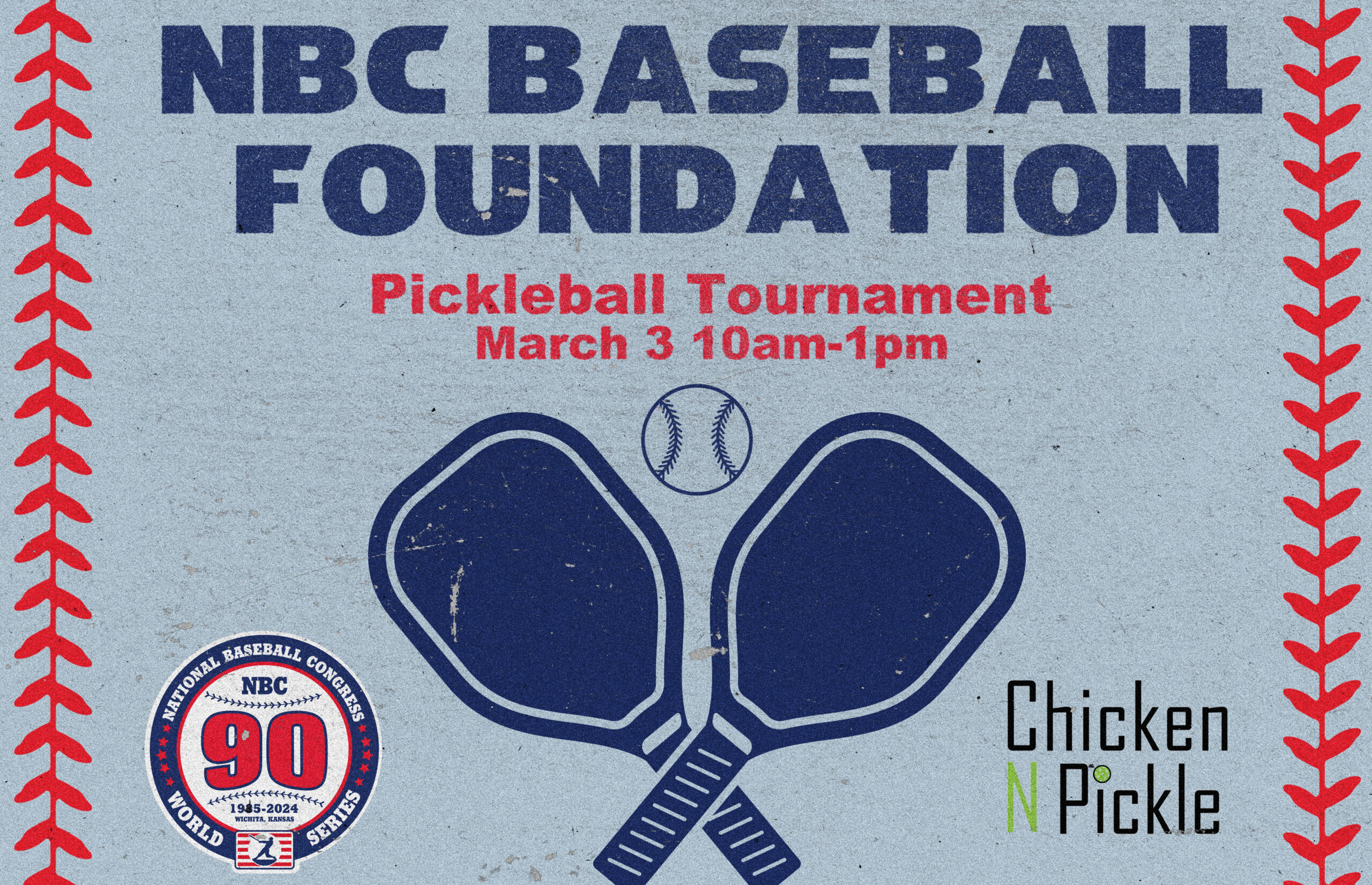
Grab your pickleball partner and help us kick off the 90th anniversary of the NBC World Series at Chicken N Pickle this March!
On Sunday, March 3rd, the NBC Baseball Foundation will be hosting our first pickleball fundraiser tournament from 10am-1pm …
90th Anniversary Tournament Announced
Wichita, Kansas – The NBC Baseball Foundation announced today that the 90th National Baseball Congress World Series, powered by Evergy, will be held July 25-August 3rd at Eck Stadium at Wichita State University. The NBC World Series has been held …
NBC Baseball Foundation Internship & Practicum Information
NBC Baseball Foundation Internships & Practicum Opportunities
The NBC Baseball Foundation (National Baseball Congress World Series) is looking for spring and summer interns to assist in the operations of the NBC Baseball Foundation, as well as the 90th Anniversary NBC World …
2023 NBC Official Scorer’s Report
Pool play tweak
The 89th National Baseball Congress World Series (NBCWS) continued the pool play format with one tweak: the
top three teams qualified for the knockout rounds, which was done in the 2019 tournament.
Improved offense
Offensive stats in the 89th NBCWS showed …
“All the Way Mae in Wichita”
All The Way Mae in Wichita
In the 1940s, baseball took on a very different role in America. Companies often had their own company teams that played across the country, with many of them making their way to Wichita to play …
- 1
- 2
- 3
- …
- 13
- Next Page »